Electricity Cost Calculator
Calculate how much any appliance costs to run based on Australian electricity rates.
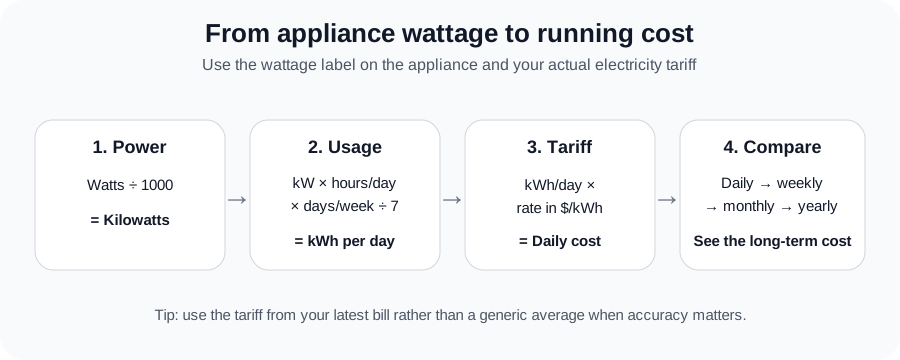
How to use this calculator
Enter appliance wattage, daily running time and electricity tariff, then calculate the daily, monthly and annual running-cost estimates.
Useful real-world examples
- Estimating what a heater or air-conditioner costs to run each day.
- Comparing two appliances with different wattages.
Important detail
Actual bills can include supply charges, time-of-use tariffs, solar exports and tiered pricing.
About the Electricity Cost Calculator
This electricity cost calculator estimates how much a specific appliance or device costs to run, based on its power rating (in watts or kilowatts), how many hours per day you use it, and the cost of electricity per kilowatt-hour (kWh) in your area. It helps you identify high-cost appliances and find where to reduce your energy bill.
How to Use It
- Enter the power rating of your appliance in watts (found on the label or manual) — or kilowatts for large appliances.
- Enter how many hours per day you use it on average.
- Enter your electricity tariff in cents per kWh (check your latest electricity bill — Australian rates typically range from 20–40 c/kWh).
- The calculator shows daily, weekly, and annual running costs.
Reducing Your Electricity Bill
The biggest energy users in Australian homes are typically air conditioning and heating (35–50% of bills), hot water systems (20–30%), and refrigerators (10–15%). Using this calculator to check the hourly cost of leaving your air conditioner running overnight compared to using a fan can reveal significant savings. Switching from a 2,400-watt electric kettle to only boiling the water you need, at 30 c/kWh, saves around $50–$70 per year. Small behaviour changes, identified through this kind of calculation, add up quickly.
Check the rating label on the back or underside of the appliance, or look in the manual. It will be listed as watts (W) or kilowatts (kW). If you only see amps (A) and volts (V), multiply them together to get watts: W = A × V. Australian mains voltage is 230V.